


Lighting a small living room in three layers
One ceiling light makes a room flat. Three layers — ambient, task and accent — make a small room feel larger, and none of them needs an electrician.
The House & Decore team · Editorial2 min read
Most Indian living rooms are lit by one thing: a tube light or a panel in the middle of the ceiling, switched on at dusk and off at bedtime. It is bright, it is even, and it makes every room look like the same room. The fix is not a brighter light; it is more of them, lower, and on different switches.
Layer one: ambient
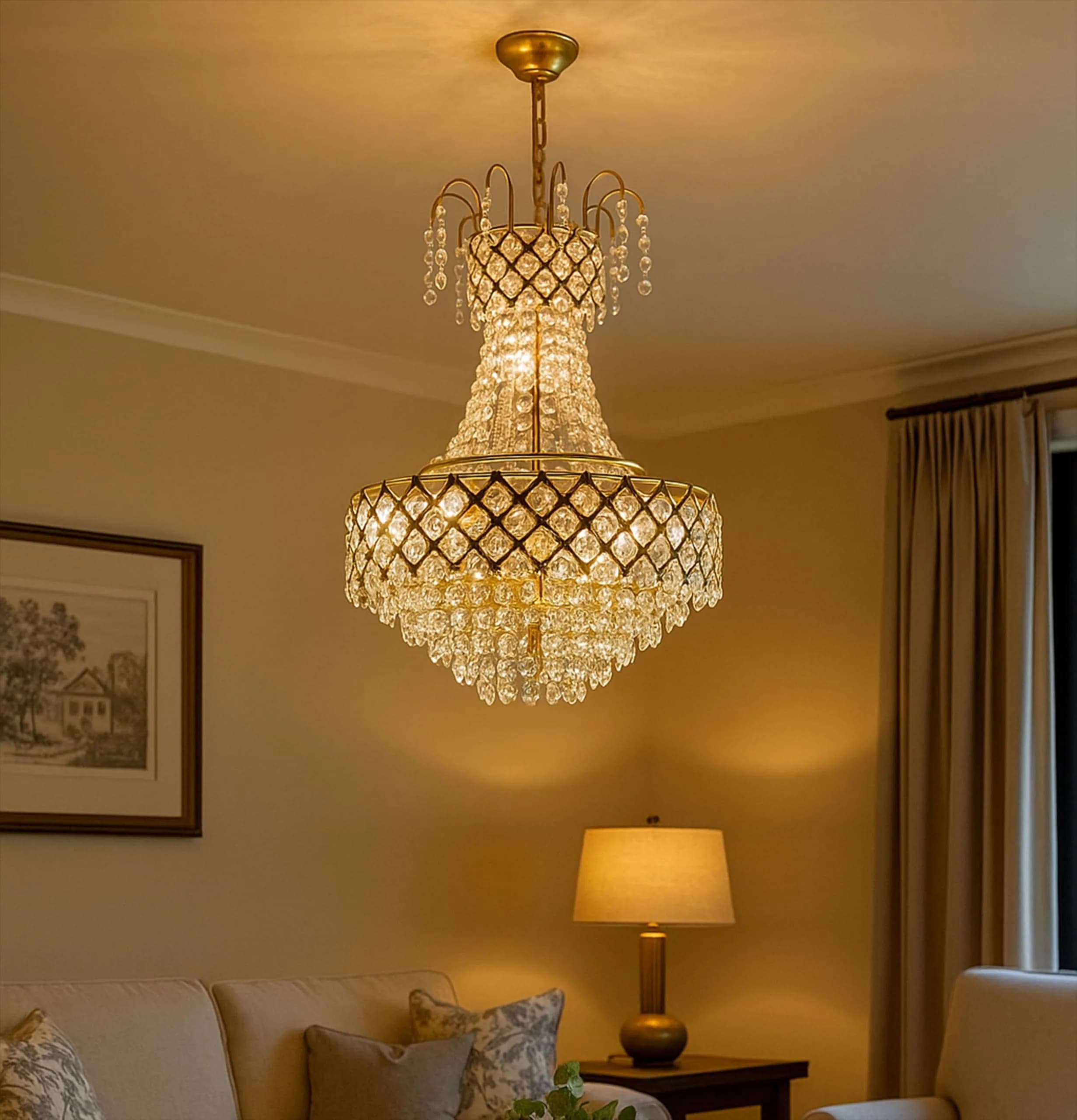
The general light, the one that replaces the tube. In a small room a single pendant hung low over the seating — the bottom of the shade at about 1.8 metres — gives the room a centre and keeps the light off the ceiling, which is where a room starts to feel small. Choose a warm bulb, 2700K to 3000K; the cool white of a panel is what makes a room feel like a corridor.
Layer two: task
Light where something is done: a floor lamp beside the chair somebody reads in, a table lamp at the end of the sofa where the phone is charged and the tea is put down. Task light is lower still, at eye level when you are sitting, and it is the layer that makes a room feel used rather than displayed. Two lamps is enough; three in a small room is a shop.
Layer three: accent
A light that points at something — a picture, a plant, the texture of a wall. In a small room the trick is to put it in a corner, low, aimed up: a wall washed from below looks taller, and a corner that is lit is a corner the eye reads as part of the room rather than as its edge. A plug-in uplighter behind a plant costs less than a rug and does more for the room.
The rule that matters more than any lamp
Separate switches. Three layers on one switch are one layer. If rewiring is not an option — a rented flat, a landlord who says no — every layer here is a plug-in, and a smart plug on each one gives you the evening setting from the sofa. Start with the pendant; add the two lamps; leave the panel for cleaning day.